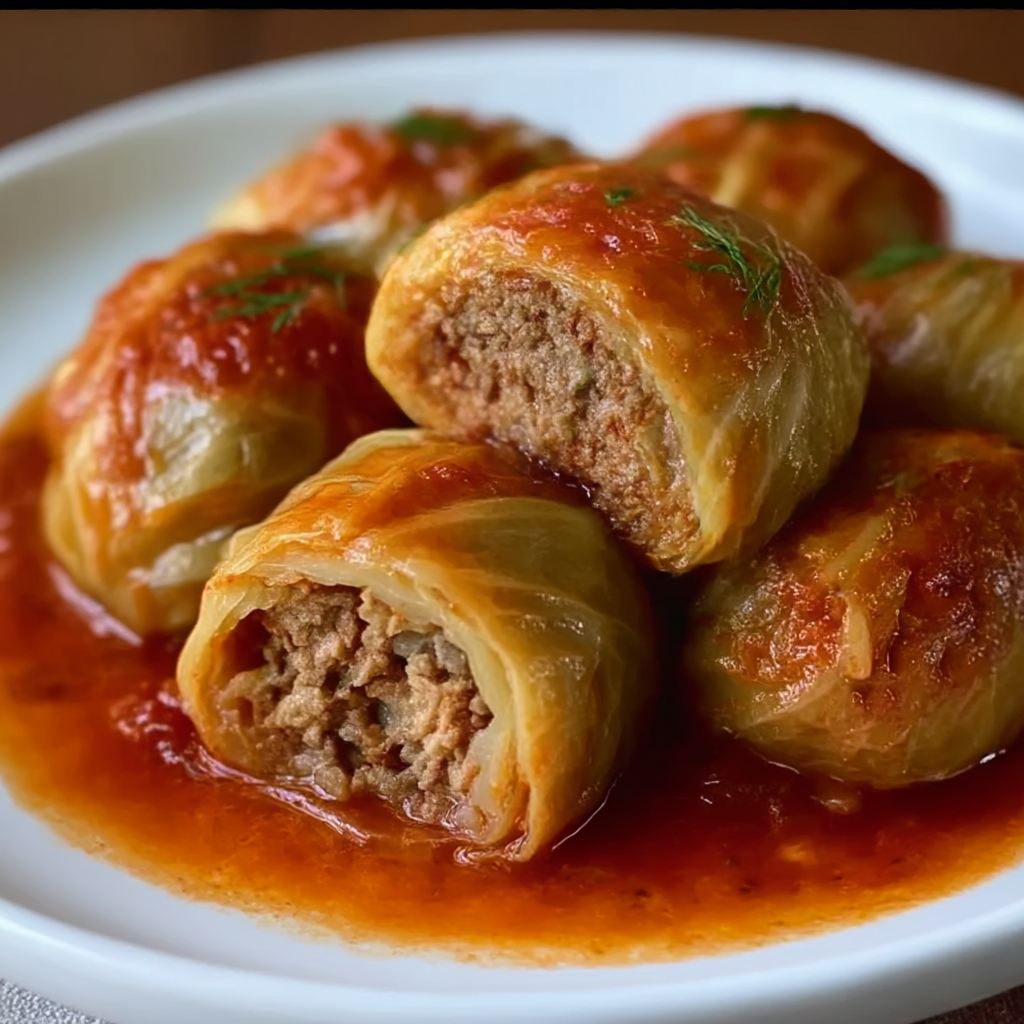
These traditional Stuffed Cabbage Rolls combine tender cabbage leaves wrapped around a savory filling of ground beef, rice, and aromatic seasonings, then simmered in a rich tomato sauce. This classic comfort food dish appears in various forms across Eastern European, Middle Eastern, and Mediterranean cuisines, with each culture adding its own distinctive touches. The recipe creates individual parcels that are both satisfying and elegant, making them perfect for family dinners or special occasions.
The technique involves blanching whole cabbage leaves until pliable, then wrapping them around a seasoned meat and rice mixture before braising in tomato sauce. This slow cooking method ensures the cabbage becomes tender while the flavors meld together beautifully.
Why You’ll Love This Recipe
Traditional Comfort Food – Delivers the satisfying, homestyle flavors that define classic European cuisine.
Complete Meal Solution – Combines protein, vegetables, and starch in individually portioned packages.
Make-Ahead Friendly – Can be assembled in advance and cooked when ready to serve.
Freezer-Friendly Results – Stores and reheats exceptionally well for convenient meal planning.
Customizable Base – Easy to modify with different meat combinations or vegetarian alternatives.
Impressive Presentation – Individual rolls create an elegant appearance for special dinners.
Ingredients You’ll Need
For the Cabbage:
- 1 medium head of cabbage – provides the wrapper for the filling
For the Filling:
- 1 lb ground beef (or beef/pork mix) – creates hearty protein base
- 1/2 cup uncooked rice – adds substance and helps bind the filling
- 1 onion, finely chopped – contributes aromatic sweetness
- 2 cloves garlic, minced – adds savory depth
- 1 egg – helps bind the meat mixture
- 1 teaspoon paprika – provides color and mild smoky flavor
- 1 teaspoon dried dill (or fresh) – adds traditional Eastern European flavor
- Salt and pepper to taste – essential seasoning balance
For the Sauce:
- 1 can (15 oz) tomato sauce or crushed tomatoes – creates braising liquid
- 2 tablespoons tomato paste – intensifies tomato flavor
- 2 tablespoons olive oil – adds richness to the sauce
- Additional salt, pepper, and dill for seasoning
Step-by-Step Instructions
Prepare the Cabbage Leaves
Bring a large pot of water to boil. Carefully remove outer leaves from cabbage head and blanch in boiling water for 2-3 minutes until pliable but not mushy. Remove with tongs and set aside to cool. Continue until you have 12-15 usable leaves.
Create the Filling
In a large bowl, combine ground beef, uncooked rice, chopped onion, minced garlic, egg, paprika, dill, salt, and pepper. Mix thoroughly until well combined and evenly seasoned.
Assemble the Rolls
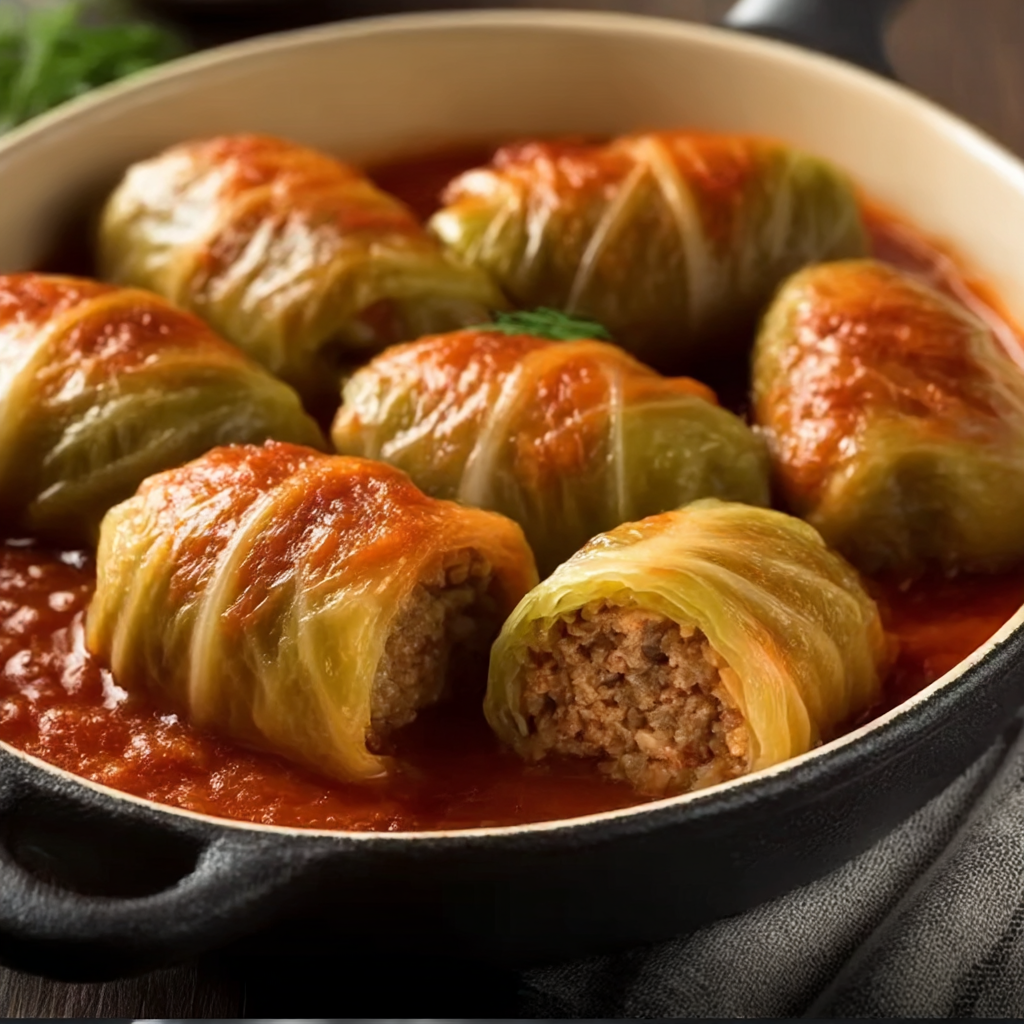
Place about 2-3 tablespoons of filling near the stem end of each cabbage leaf. Fold the sides over the filling, then roll tightly from stem to tip, creating a neat package. Repeat with remaining leaves and filling.
Prepare the Sauce
In a bowl, combine tomato sauce, tomato paste, olive oil, dill, salt, and pepper. Whisk until smooth and well blended.
Arrange and Cook
Place stuffed rolls seam-side down in a large baking dish. Pour sauce over rolls, ensuring they’re mostly covered. Cover tightly with foil and bake at 375°F (190°C) for 1 hour until cabbage is tender and rice is cooked through.
Rest and Serve
Allow rolls to rest for 10 minutes before serving to let flavors settle and prevent burns from hot filling.
Recipe Notes & Tips
Cabbage Preparation – Don’t over-blanch leaves; they should be pliable but still have some structure.
Rice Considerations – The rice will cook during braising, so keep it uncooked in the filling mixture.
Rolling Technique – Roll tightly but not so tight that the cabbage tears under pressure.
Sauce Coverage – Ensure rolls are mostly covered with sauce to prevent drying during cooking.
Doneness Check – Pierce with a knife to ensure rice is tender and meat is cooked through.
Nutritional Information
- Prep Time: 30 minutes
- Cook Time: 1 hour
- Total Time: 1 hour 30 minutes
- Servings: 6-8 people
- Complete meal with balanced nutrition
Perfect Pairings
Traditional Accompaniments – Sour cream or yogurt provides cooling contrast to the rich rolls.
Bread Options – Crusty bread or dinner rolls help soak up the flavorful sauce.
Simple Sides – Roasted root vegetables or a simple green salad complement the dish.
Beverage Choices – Red wine or hearty beer pair well with the robust flavors.
Ideal Occasions
Family Dinners – Perfect for Sunday meals or when you want something special and comforting.
Holiday Celebrations – Traditional dish that connects to cultural heritage and family traditions.
Make-Ahead Meals – Excellent for meal planning and preparing in advance for busy weeks.
Cold Weather Comfort – Warming, satisfying dish ideal for autumn and winter dining.
Storage & Make-Ahead Tips
Assembly Ahead – Can be completely assembled and refrigerated overnight before cooking.
Freezing Instructions – Freeze cooked or uncooked rolls for up to 3 months; thaw before cooking or reheating.
Leftover Storage – Refrigerate for up to 4 days; flavors often improve with time.
Reheating Method – Cover and warm in oven at 350°F until heated through.
Creative Variations to Try
Meat Combinations – Try beef/pork/veal mix as mentioned in the Polish grandmother’s version for richer flavor.
Vegetarian Option – Use mushrooms, lentils, and additional vegetables instead of meat.
Grain Alternatives – Substitute quinoa or bulgur for rice for different textures and flavors.
Sauce Variations – Add wine, herbs, or different spices to customize the braising liquid.
Troubleshooting Common Issues
Torn Leaves – If leaves tear, overlap pieces or use smaller amounts of filling.
Uncooked Rice – Ensure adequate liquid coverage and cooking time for rice to fully cook.
Dry Results – Add more sauce or broth during cooking if rolls appear to be drying out.
Falling Apart – Roll more tightly and place seam-side down to help maintain shape.
Cultural Connections
The comments mention interesting family variations, including Kelli’s simplified version using yeast roll dough and Toni’s Polish grandmother’s recipe with bacon and multiple meat types. These variations show how traditional recipes adapt across families and cultures while maintaining their essential comfort food character.
Why This Recipe Works
Stuffed cabbage rolls succeed because they combine complementary flavors and textures while using a cooking method that allows everything to meld together harmoniously. The cabbage becomes tender and sweet, the meat stays moist, and the rice absorbs both the meat juices and tomato sauce flavors.
The individual portion format makes serving elegant while the braising technique ensures thorough, even cooking.
Final Thoughts
This recipe represents the kind of traditional comfort food that connects us to cultural heritage while providing practical, satisfying meals for modern families. The time investment pays dividends in both flavor development and the satisfaction of creating something from scratch that nourishes both body and soul.
Whether following family traditions or creating new ones, stuffed cabbage rolls offer the kind of meaningful cooking experience that makes ordinary meals feel special.