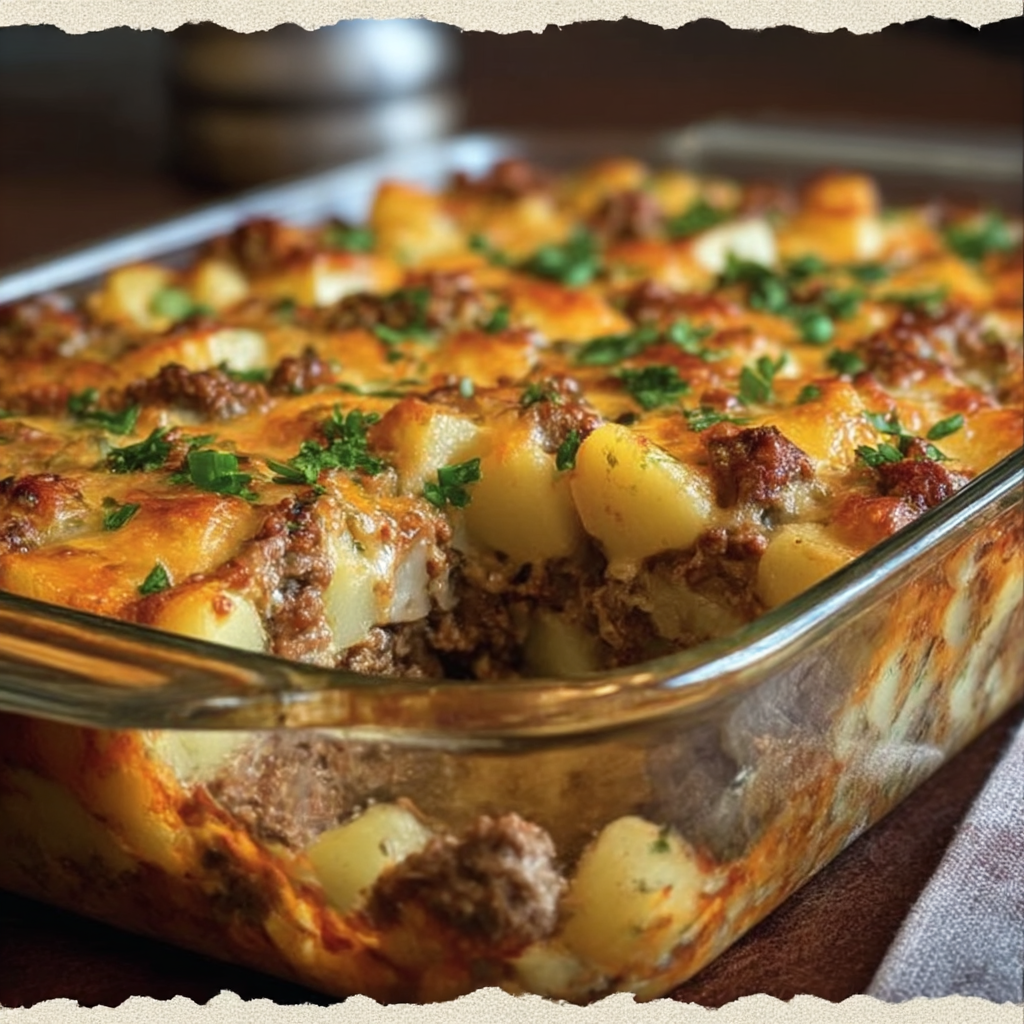
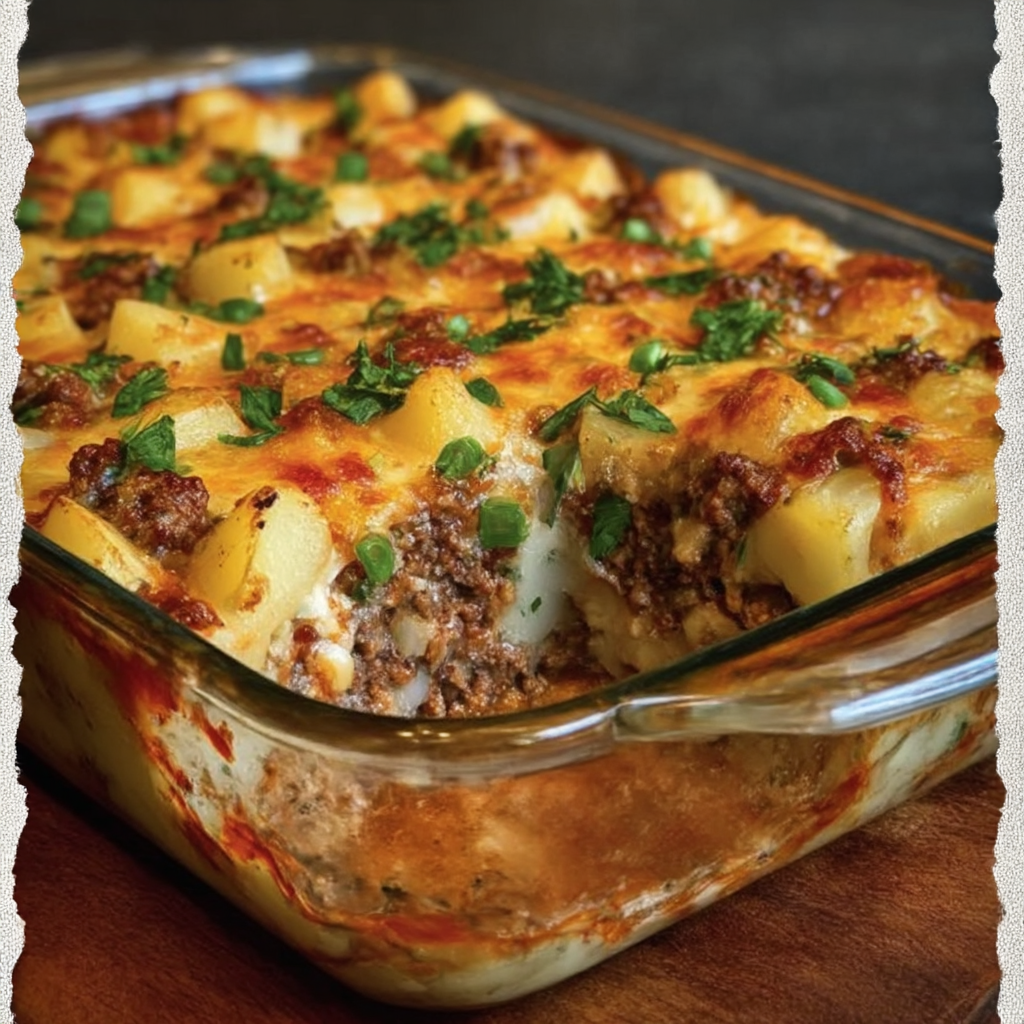
This Loaded Potato & Meatloaf Casserole transforms two classic comfort foods into a single layered dish that combines seasoned ground beef with creamy mashed potatoes and melted cheese. The recipe builds a meatloaf base in a baking dish, then tops it with prepared mashed potatoes and cheese, creating a substantial meal that delivers familiar flavors in an innovative format. This approach eliminates the need to prepare separate side dishes while creating appealing visual layers.
The technique involves partially baking the meatloaf layer first, then adding the potato topping for the remaining cooking time. This ensures both components cook properly while maintaining distinct textures and flavors.
Why You’ll Love This Recipe
Two-in-One Convenience – Combines main dish and side dish into a single casserole for simplified meal planning.
Comfort Food Appeal – Delivers the satisfying flavors of both meatloaf and loaded mashed potatoes.
Family-Friendly Portions – One dish feeds 6 people generously with familiar, appealing flavors.
Make-Ahead Potential – Can be assembled in advance and baked when ready to serve.
Visual Impact – Layered presentation creates an attractive dish that looks more complex than it is.
Leftover Value – Reheats well and provides satisfying meals for multiple days.
Ingredients You’ll Need
For the Meatloaf Base:
- 1.5 pounds ground beef – provides substantial protein foundation
- 1 onion, finely chopped – adds moisture and aromatic sweetness
- 2 cloves garlic, minced – contributes savory depth
- 1/2 cup breadcrumbs – helps bind the meat mixture
- 1/4 cup milk – adds moisture and helps create tender texture
- 1 egg – binds ingredients together
- 1 tablespoon Worcestershire sauce – enhances umami flavors
- 1 teaspoon salt – seasons the meat properly
- 1/2 teaspoon black pepper – adds gentle heat
- 1/2 cup ketchup – provides tangy glaze for the meatloaf layer
For the Potato Layer:
- 2 pounds potatoes, peeled and sliced – creates substantial starch component
- 1/2 cup sour cream – adds tangy richness to potatoes
- 1/4 cup milk – helps achieve proper mashed potato consistency
- 2 tablespoons butter – contributes richness and flavor
- 1 cup shredded cheddar cheese – provides melty topping
- 1/4 cup chopped green onions – adds color and mild onion flavor
- Salt and pepper to taste – seasons the potato layer
Step-by-Step Instructions
Prepare the Foundation
Preheat oven to 375°F (190°C) and grease a large baking dish to prevent sticking.
Create the Meatloaf Layer
In a large bowl, combine ground beef, chopped onion, minced garlic, breadcrumbs, milk, egg, Worcestershire sauce, salt, and pepper. Mix thoroughly and press mixture into the bottom of the greased baking dish. Spread ketchup evenly over the top.
Initial Baking
Bake the meatloaf layer for 25 minutes. This partial cooking ensures the meat is properly cooked before adding the potato layer.
Prepare the Potatoes
Meanwhile, boil sliced potatoes until tender, approximately 15 minutes. Drain thoroughly and mash with sour cream, milk, and butter. Season with salt and pepper to taste.
Assemble the Final Layers
Spread mashed potatoes evenly over the partially cooked meatloaf. Sprinkle shredded cheddar cheese and chopped green onions over the potato layer.
Complete the Cooking
Return to oven and bake for another 20 minutes until cheese is melted and lightly golden.
Rest Before Serving
Allow casserole to rest for 10 minutes before serving. This helps layers set properly and prevents burns from hot filling.
Recipe Notes & Tips
Meatloaf Binding – Mix ingredients just until combined to avoid tough texture.
Potato Drainage – Drain potatoes thoroughly to prevent watery mashed potato layer.
Layer Timing – Partial cooking of meatloaf ensures both components finish properly.
Cheese Distribution – Spread cheese evenly for consistent melting and appealing presentation.
Resting Importance – Cooling time allows easier serving and better texture.
Nutritional Information
- Prep Time: 20 minutes
- Cook Time: 45 minutes
- Total Time: 1 hour 5 minutes
- Servings: 6 people
- Calories per serving: ~600 kcal
Perfect Pairings
Fresh Balance – Simple green salad or steamed vegetables provide nutritional contrast to the rich casserole.
Bread Options – Dinner rolls or garlic bread complement the hearty flavors.
Acidic Elements – Pickles or pickled vegetables cut through the richness effectively.
Light Beverages – Iced tea or sparkling water balance the substantial meal.
Ideal Occasions
Family Dinners – Substantial portion sizes and familiar flavors appeal to various ages.
Comfort Food Cravings – Delivers satisfaction during cold weather or stressful times.
Potluck Contributions – Travels well and serves multiple people with universal appeal.
Sunday Meals – Perfect for leisurely family dinners that bring everyone together.
Storage & Make-Ahead Tips
Assembly Ahead – Can be prepared through potato layer and refrigerated before final baking.
Leftover Management – Refrigerate covered for up to 4 days; flavors often improve overnight.
Reheating Method – Cover with foil and warm in 350°F oven until heated through.
Portion Storage – Individual portions can be wrapped and stored separately for convenience.
Creative Variations to Try
Protein Alternatives – Use ground turkey, chicken, or a beef-pork combination for different flavors.
Cheese Varieties – Try different cheese types like pepper jack or Swiss for varied taste profiles.
Vegetable Additions – Include corn, peas, or diced bell peppers in either layer for extra nutrition.
Topping Enhancements – Add bacon bits or additional herbs for more loaded potato appeal.
Troubleshooting Common Issues
Watery Results – Ensure potatoes are well-drained and meatloaf fat is managed properly.
Uneven Cooking – Check that meatloaf layer is evenly pressed and oven temperature is accurate.
Dry Texture – Don’t overcook; cover with foil if top browns too quickly.
Layer Separation – Allow proper resting time and ensure potato layer isn’t too thick.
Why This Recipe Works
This casserole succeeds because it respects the cooking requirements of both meatloaf and mashed potatoes while combining them in a format that enhances rather than compromises either component. The staged cooking process ensures proper texture for both layers while the familiar flavors create broad appeal.
The layered presentation makes ordinary ingredients feel more special while the one-dish format provides practical advantages.
Final Thoughts
This recipe demonstrates how classic comfort foods can be successfully combined into new formats that maintain their essential appeal while offering practical benefits. The result is a substantial, satisfying meal that delivers familiar comfort food satisfaction in a format that works well for family dining and entertaining.
Whether serving for Sunday dinner or looking for reliable weeknight options, this casserole provides the kind of hearty satisfaction that makes ordinary meals feel comforting and complete.